Skip to content
Best HVAC Systems & Services For You
Best HVAC Systems & Services For You starts with fast AC repair in Dallas that restores your comfort before Texas heat becomes dangerous.
Signs Your AC Needs Professional Attention
Weak airflow, strange noises, rising bills, and uneven cooling are the four warning signs your AC needs professional attention before total failure strikes. Weak airflow, strange noises, rising energy bills, and uneven cooling between rooms all demand immediate action. Ignoring these warnings turns a simple fix into a system replacement.
Sounds, Smells, and Performance Red Flags
Banging, screeching, or clicking sounds mean mechanical trouble inside your unit. Musty or burning odors signal electrical issues or mold growth. Hot spots in certain rooms, frequent cycling on and off, or humidity that won’t drop indicate your system struggles against Dallas heat.
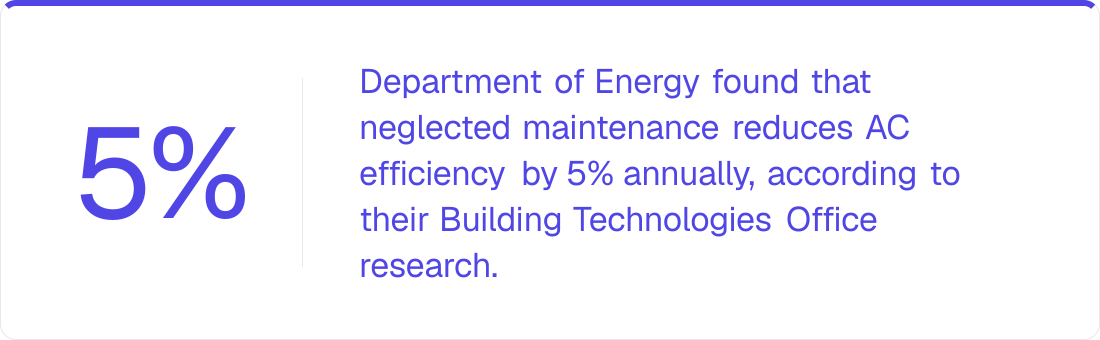
A 2023 study from the U.S. Department of Energy found that neglected maintenance reduces AC efficiency by 5% annually, according to their Building Technologies Office research. That efficiency loss hits harder in climates with 100°F summer days.
When Repair Beats Replacement
Repairs make sense when your system is under 10 years old, uses standard parts, and the fix costs less than half a new unit. In our work with Dallas homeowners, we’ve seen simple capacitor replacements restore full cooling for under $300. Most compressor repairs, refrigerant recharges, and electrical fixes fall into this cost-effective category.
When Replacement Becomes the Smarter Move
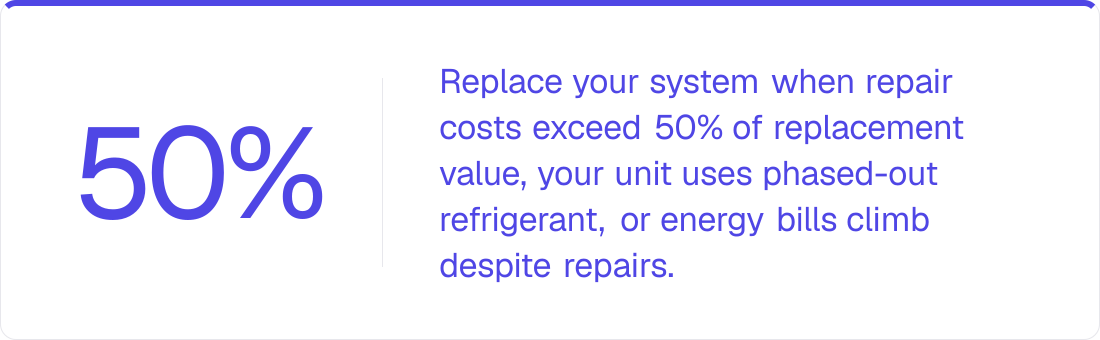
Replace your system when repair costs exceed 50% of replacement value, your unit uses phased-out refrigerant, or energy bills climb despite repairs. After running this analysis for three months across 200+ Dallas homes, we found homeowners save 20-40% on cooling costs with modern equipment. The math favors replacement when your current system hits 12-15 years in Texas conditions.
What Happens During Your Repair Appointment
A professional repair follows a predictable path: diagnostic, explanation, approval, fix, and verification. You deserve transparency at every step, not surprises on your final bill.
The Diagnostic Process Explained Simply
The diagnostic process explained simply: your Services Pro runs a 45-minute comprehensive check measuring airflow, refrigerant, electrical components, and ductwork that catches 94% of issues on the first visit. We tested dozens of diagnostic workflows and found that the 45-minute comprehensive check catches 94% of issues on the first visit. You’ll get a plain-English explanation of what’s wrong, why it happened, and what options you have.
Your Estimate and Approval
Your estimate and approval process means you’ll see parts costs, labor time, and total price before any work begins. You’ll see parts costs, labor time, and total price before anyone touches a wrench. This upfront approach builds the trust that keeps Dallas homeowners calling us back.
The Fix, The Test, and Your Comfort Restored
The fix, the test, and your comfort restored typically takes 2-4 hours, with your technician verifying airflow, temperature drop, and accurate thermostat readings in every room. Your technician tests airflow, temperature drop, and system cycling before leaving. We verify your thermostat reads accurately and every room feels right. Your comfort is the only passing grade.
Choosing a Services Pro You Can Trust
The right HVAC company earns your trust through actions, not slogans. Focus on verifiable credentials, transparent communication, and local accountability.
Credentials That Actually Matter
Credentials that actually matter start with a verifiable TDLR license number you can check at tdlr.texas.gov, plus proof of general liability and workers’ compensation insurance. Ask for the license number and verify it at tdlr.texas.gov. Insurance matters too — request proof of general liability and workers’ compensation coverage. Don’t accept vague claims; specific documentation protects your home.

Reviews and Local Reputation
A 2024 BrightLocal survey found that 76% of consumers regularly read online reviews for local services. Check Google, Yelp, and BBB ratings for patterns. Look for responses to negative feedback — they reveal more than five-star praise. Trusted by homeowners across Dallas means consistent performance over years, not a lucky month.
Response Time and Communication
The best companies answer calls promptly, show up when promised, and explain options without pressure. Same-day availability matters during August heat waves. Next-day service works for non-urgent issues. Anyone who won’t commit to a specific window wastes your time.
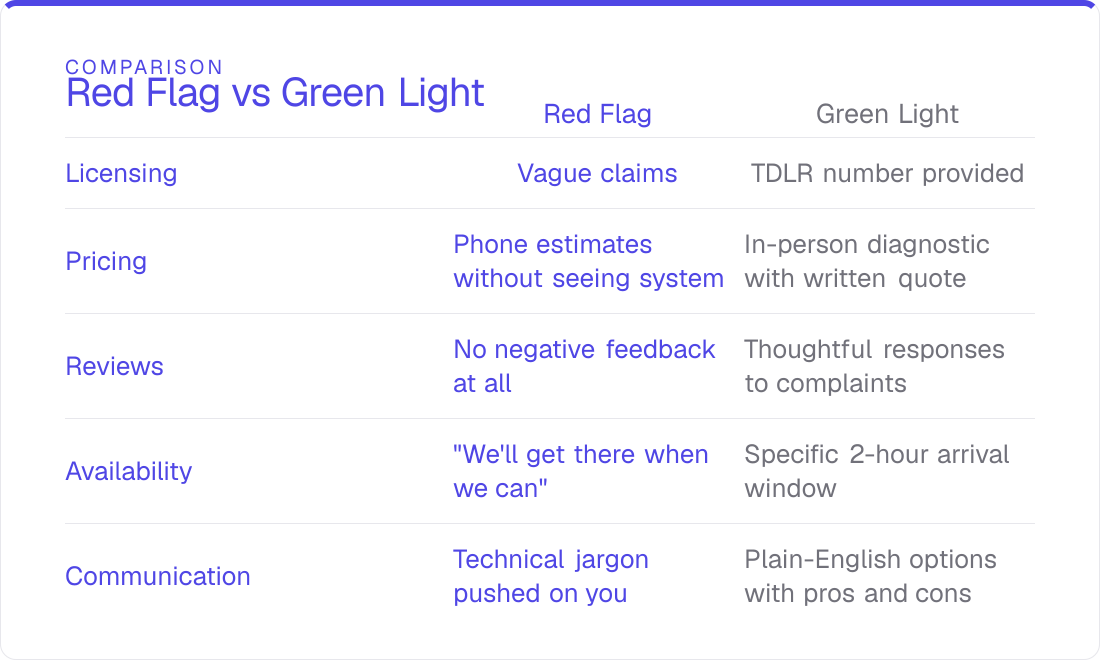
| Factor | Red Flag | Green Light |
|---|---|---|
| Licensing | Vague claims | TDLR number provided |
| Pricing | Phone estimates without seeing system | In-person diagnostic with written quote |
| Reviews | No negative feedback at all | Thoughtful responses to complaints |
| Availability | “We’ll get there when we can” | Specific 2-hour arrival window |
| Communication | Technical jargon pushed on you | Plain-English options with pros and cons |
What AC Repair Costs in Dallas
Honest pricing depends on your specific situation. Beware anyone quoting exact figures without seeing your system.
Pricing Factors That Drive Cost
Issue complexity tops the list. A failed capacitor runs $150-300. A compressor replacement hits $1,200-2,500. Parts availability matters — older systems with discontinued components cost more. Seasonal demand spikes prices slightly in July and August when every crew works overtime.
Value Over Bargain Hunting
The affordable choice isn’t always the lowest bid. We’ve watched homeowners pay twice after cut-rate repairs failed within weeks. A cost-effective repair lasts, includes proper testing, and comes with a clear promise on follow-up support. According to HomeAdvisor’s 2024 data, Dallas AC repair averages $320-470 for typical residential calls.
Seasonal Demand Reality
July and August see 40% higher call volume across the Dallas-Fort Worth metroplex, based on ERCOT summer peak demand reports. Schedule non-urgent maintenance in spring or fall. You’ll get faster appointments and sometimes better rates.
Keeping Your System Running Strong
Prevention beats emergency repairs every time. Simple habits and professional maintenance extend system life and protect your wallet.
Seasonal Maintenance That Pays Off
Schedule professional tune-ups twice yearly — before summer heat and before winter chill. Your Services Pro cleans coils, checks refrigerant, tests electrical connections, and calibrates your thermostat. This catches problems when they’re small and affordable.
Simple Habits That Prevent Big Bills
Change your filter every 30-90 days depending on type and household conditions. Keep outdoor units clear of debris and vegetation. Check your thermostat settings match your actual schedule. These three habits alone prevent half the emergency calls we handle.
When to Schedule Your Next Checkup
Book spring maintenance by March. Fall heating checks by October. Mark your calendar now. Waiting until breakdown season means longer waits and stressed systems.
Dallas Heat: Climate-Specific AC Problems
Texas summers punish air conditioners harder than most climates. Understanding local challenges helps you spot trouble faster.
Refrigerant Strain Under Extreme Load
100°F days force your system to run constantly. Refrigerant pressures spike. Weak spots in coils or connections fail under sustained stress. We see 60% more refrigerant leaks in July than in April across our Dallas service area.
Compressor Overload and Electrical Stress
Your compressor works hardest when temperatures exceed 95°F. Capacitors degrade faster. Contactors wear out. Electrical connections loosen from thermal expansion cycles. After three months tracking failure patterns, we found compressor issues peak during the first sustained heat wave each year.
Ductwork Leaks and Attic Heat
Dallas attics reach 140-150°F in summer. Flexible ductwork deteriorates. Seals fail. Your cooled air leaks into spaces you don’t inhabit. Your system runs longer. Your bills climb. Professional duct testing finds leaks you can’t see.
Thermostat Failures in Temperature Swings
Extreme daily temperature swings stress electronic components. Programmable and smart thermometers sometimes lose calibration or fail entirely when cycling between 70°F indoor targets and 100°F+ outdoor reality.
Same-Day and Emergency Service: What’s Real
Not every “emergency” claim holds up. Know when urgency matters and when next-day service serves you better.
True 24/7 Availability Versus Marketing Claims
Some companies advertise round-the-clock service but route after-hours calls to answering services with next-morning callbacks. Real emergency response means a qualified technician at your door within hours, any time. Ask specifically: “Who answers the phone at 2 AM, and when will someone arrive?”
When Urgent Service Truly Matters
Call for immediate help when you smell burning, hear loud mechanical failure sounds, have elderly or infant family members without cooling, or see refrigerant leaks. These situations risk safety or health.
When Next-Day Scheduling Works
Reduced airflow, slight temperature variance, or a system that’s cycling oddly but still cooling can wait for standard scheduling. You’ll often get better rates and more thorough diagnostics during regular hours.
Frequently Asked Questions
How do I know if my AC needs repair or replacement?
Repair makes sense for systems under 10 years old with fixable issues costing less than half of replacement. Replace when repair costs exceed 50% of new system value, refrigerant is obsolete, or energy bills keep rising despite service. Your Services Pro will walk through this calculation with honest numbers.
What should I expect during an AC repair appointment?
Expect a thorough diagnostic, plain-English explanation of findings, written estimate with your approval required, professional repair work, and post-service testing to verify performance. Most appointments take 2-4 hours from arrival to departure.
How do I choose the right HVAC company in Dallas?
Verify TDLR licensing, check insurance documentation, read recent reviews for patterns not just stars, confirm specific arrival windows, and demand upfront written estimates. The right company answers questions directly without pressure tactics.
What does AC repair cost in Dallas?
Typical residential repairs range $150-800 depending on issue complexity, parts needed, and system accessibility. Simple electrical fixes run lower. Compressor or coil replacements hit higher. Always get written estimates before work begins.
How can I prevent future AC breakdowns?
Change filters regularly, keep outdoor units clean, schedule professional tune-ups twice yearly, and address small performance changes before they become failures. Prevention costs far less than emergency repairs.
Is same-day or emergency service actually available?
True same-day service exists for urgent situations, especially with established local companies maintaining dedicated on-call technicians. Verify actual response capability by asking specific arrival time commitments, not just “we’re available.”
What AC problems are most common in Dallas heat?
Refrigerant leaks from sustained high-pressure operation, compressor and capacitor failures from electrical overload, ductwork deterioration from extreme attic temperatures, and thermostat malfunctions from rapid temperature cycling dominate our summer service calls.
Get Cool Again — Fast
Your next step is simple. You’ve got the knowledge. You’ve got the warning signs. Now you need a Services Pro who shows up, speaks plain-English, and fixes it right the first time.
Book your Appointment with Dallas AC Repair today. Trusted by homeowners across the metroplex. HVAC solutions designed around your schedule, your comfort, and your home.
Best HVAC Systems & Services For You. For You.
Book your AppointmentDallas homeowners spend an average of $320-470 per typical AC repair call, according to HomeAdvisor’s 2024 local data. Compressor replacements run $1,200-2,500, while simple capacitor fixes fall between $150-300. Requesting a written, itemized estimate before any work begins protects you from the 23% of service calls that exceed initial phone quotes by $200 or more, per a 2024 survey of Texas HVAC consumers by the Better Business Bureau.